


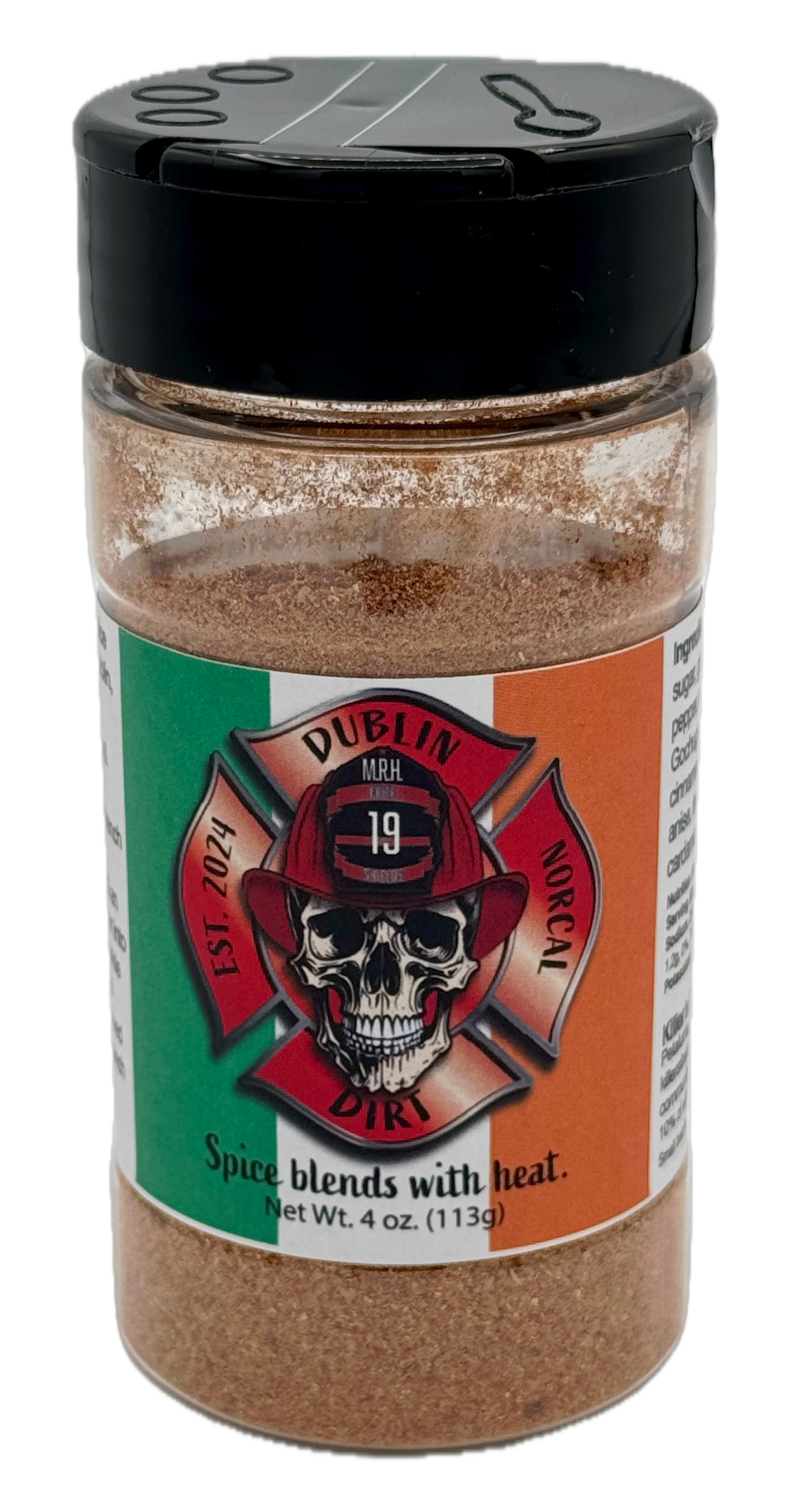

Dublin Dirt is a unique spice blend inspired by the Irish Spice Bag made famous in Templeogue, Dublin at the Sunflower Chinese Takeaway. Spicing up your culinary creations, one blend at a time, this blend brings a taste of authentic Irish-Chinese fusion straight to your kitchen. Perfect for seasoning meats, vegetables, or even fries, Dublin Dirt adds a mouth-watering depth of flavor that will have you hooked. Experience the spirit of Dublin with every sprinkle and transform your meals into a gourmet delight.
Dublin Dirt - Irish/Asian Fusion Spice Blend
Irish Spice Bag
Fry or bake 4–6 skinless, boneless chicken breasts or thighs, seasoned and sliced into 1” strips. Cook French fries until golden and crispy. In 2 tbsp of oil over high heat, sauté thinly sliced red and orange peppers with onions until lightly browned and softened.In a large bowl, toss the chicken, fries, and veggies with 2–3 tbsp of Dublin Dirt. Serve hot in individual paper bags for that classic takeaway feel.
Pair with spicy curry sauce, hot honey, or ranch dressing.
Also amazing sprinkled over burgers, roasted vegetables, cottage cheese, popcorn, or eggs.
Crafted With:
A bold mix of Szechuan pepper, Gochugaru, and smoked paprika, balanced with warm spices like cinnamon, clove, cardamom, and fennel—layered with garlic, ginger, and onion, all tied together with a touch of cane sugar and kosher salt.Dublin Dirt Spice Blends are sifted prior to packaging. Stand up bags are sealed and zipped to keep the contents fresh. Shaker spice jars are sealed with a pressure sensitive liner. Store in a cool, dry place, and away from heat. Products may clump due to heat, humidity or improper seal. If your spice blend is clumping, remove from package and resift, or place in a coffee grinder or blender.
Our shipping methods are reliable, using Shippo that searches for the cheapest rates and carriers according to your selected delivery times. Average delivery 2-5 days after order placed and packaged.
If you’re not satisfied with your product for any reason within 30 days of receiving your order, contact us at community@killersfirehousefoods.com for a replacement, substitution, or refund. Please include any photos of damaged products during shipping and/or any complaints with the product(s).
On the Mescalero Apache Reservation, in south central New Mexico, increased tourist traffic—along with drought conditions—resulted in increased fire damage to tribal timber. Responding to the crisis, A.B. “Bert” Shields, a ranger for thirty years on the Mescalero Reservation, sent out word in the spring of 1948 that he was organizing a trained Apache firefighting crew. “I hope to help you fellows organize into a group that will make history in the Southwest,” Shields told nineteen Apache men, most of whom were World War II veterans. In announcing his intentions, Shields told prospective firefighters to “bring along another man you think might have what it takes to be a red hatted fire eater.”
Shields' initiative to form a trained firefighting crew marked a significant step in addressing the increasing threat of wildfires exacerbated by rising tourist activity and persistent drought conditions in the region. By assembling a team of young, capable Apache men—many of whom had recently returned from their service in World War II—Shields aimed not just to combat the immediate fire hazards but also to empower the community and reshape their relationship with the land.
The recruitment call was designed to foster a sense of unity and purpose among the participants. The phrase "red hatted fire eater" conveyed both the seriousness and intensity of the work ahead, while also implying a sense of pride in taking on such a critical role. As these individuals came together, they were not just fighting fires; they were also reclaiming their heritage, showcasing the resilience and strength of the Mescalero Apache people.
Training these firefighters would involve not only techniques for combating fires but also education on forest ecology and land management, equipping them with the knowledge to act as stewards of their environment. The crew's formation represented the convergence of traditional knowledge and modern firefighting strategies, allowing the Mescalero Apache to take charge of their own destiny in battling environmental challenges.
As the program took shape, the community undoubtedly rallied around the effort, recognizing the vital role these firefighters would play in protecting their homes, livelihoods, and the natural resources that held deep cultural significance. Through teamwork and determination, they aimed to preserve their land for future generations, marking a significant chapter in both their environmental history and their ongoing relationship with the natural world.